A First Visit to an Unfamiliar Ground: Look Before Play
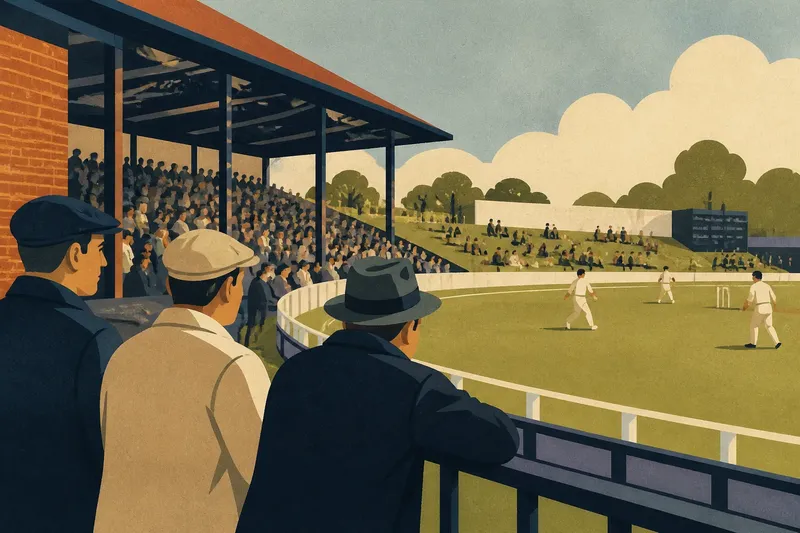
A first visit to an unfamiliar sporting ground feels calmer when you understand its signs, sounds and rituals, and can follow the event on your own terms.
The most common mistake on a first visit to an unfamiliar sporting ground is to assume that understanding the event means knowing the sport already. That can make the first few minutes feel like a test: you may miss the small rituals, signals and sounds that tell you what the crowd is responding to. Looking for those cues, rather than trying to memorise rules, makes the occasion easier to follow.
A ground has its own vocabulary. It may be spoken through a bell, a chant, a change of music, a flag or the movement of people towards a particular part of the stands. You do not need to interpret every sign correctly. Start with what is repeated, and let the event explain itself at its own pace.
What should you learn about the event before arriving?
Check the event information for its format and any customs that affect visitors. A match, race or tournament may have pauses, intervals or scheduled ceremonies that shape the experience. The venue’s own guidance can also explain whether spectators are invited to stand, join a chant or observe a moment of silence.
If you are unfamiliar with the sport, learn a few basic terms from an official rules page or programme. You need only enough to recognise what is happening: how play starts, what causes a pause and what marks the end of a contest or period. Keep the explanation simple. A programme is a reference, not an exam paper.
Traditions vary between clubs, sports and local communities, so avoid treating a custom from one ground as universal. The same gesture or song can have a different meaning elsewhere. If the event information does not explain something, it is fine to watch and listen before deciding whether to join in.
Which sounds and signals are worth noticing?
Listen for sounds that recur at a meaningful moment. A whistle may stop play, a bell may mark a lap or round, and a familiar tune may signal that the crowd is being invited to respond. The programme or event announcements can clarify signals that are specific to the competition.
Notice what follows a sound rather than trying to identify it in isolation. Does play pause? Do officials move into position? Does the crowd turn its attention to a particular area? One clue on its own can be ambiguous; a repeated sequence is easier to understand.
Visual cues matter too. A flag, scoreboard symbol or official’s gesture may indicate a change in the event. If you cannot see a signal clearly, wait for an announcement or ask a companion rather than guessing. Treat the cue as part of the scene until you have enough context to interpret it.
How can you follow the crowd without copying everything?
A crowd can tell you where attention is moving, but it does not tell you what you must do. People may stand for a brief moment, sing, clap in time or remain quiet. Watch what happens and decide whether joining in feels appropriate to you.
Some moments call for restraint. If people around you become still, or an announcement asks for quiet, pause and listen. If a chant begins, you can follow the rhythm without knowing every word, or simply watch. Being present does not require performing enthusiasm.
Think of a programme as a paper map: useful for orientation, but not a substitute for looking at the place around you. It can name a ceremony or explain a competition format; the crowd’s response supplies the immediate context. Let each inform the other.
What do first-time spectators often ask?
Do I need to know all the rules before I go?
No. A basic sense of how play begins and pauses is often enough to follow the event as a newcomer. Use the programme or official event information to check details when a moment leaves you unsure.
Should I join in with a chant?
Watch how people around you respond and follow any guidance from the event organisers. You can join when it feels comfortable, or listen without taking part.
What if I misread a signal?
Wait for the next cue, an announcement or a companion’s explanation instead of acting on a guess. Signals can be specific to a sport or competition, and repeated patterns usually make their purpose clearer.
How can I be respectful during a ceremony?
Follow the announcement and the people around you, particularly if they become quiet or are asked to stand. If you are uncertain, pause and observe rather than interrupting the moment.
How can you make sense of the event as it unfolds?
Choose a few recurring cues to follow: the official who restarts play, the sound that marks a pause, or the crowd’s reaction when the score or position changes. You are building a simple account of the event, not trying to identify every technical detail.
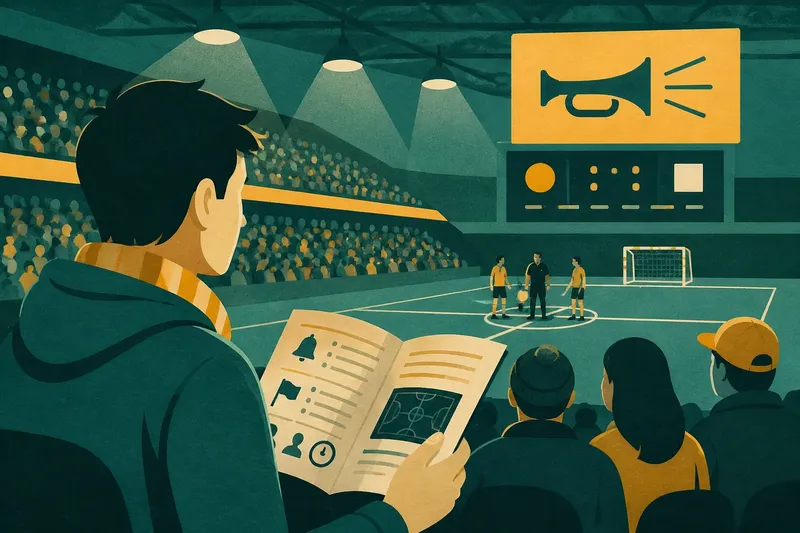
Say you attend a fictional indoor match and hear a short horn followed by a pause in play. You notice that the scoreboard changes, the officials move to the centre, and the crowd settles before play resumes. The sequence gives you a practical answer: the horn marks a break in the action, while the scoreboard and officials show when the next phase begins. You may still not know every rule, but you can follow the event’s rhythm without pretending to know more than you do.
If an explanation from a companion conflicts with what you see, ask what signal they are responding to. That keeps the conversation grounded in the event rather than turning it into a dispute about expertise. When no one knows, waiting for the next announcement is a perfectly useful answer.
How can a first visit to an unfamiliar sporting ground feel more legible?
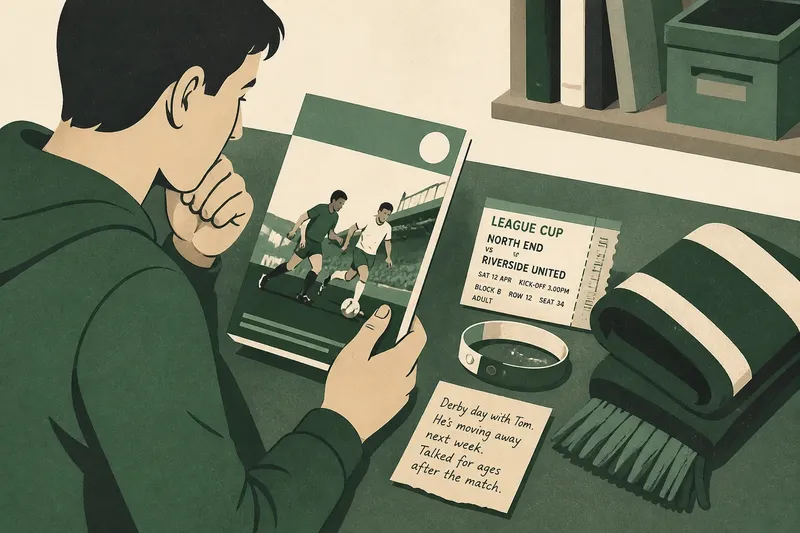
Keep your attention on the event’s repeated cues rather than collecting trivia. A short note in a programme or on your phone can record a term you want to look up later, but you do not need to document the whole occasion. Let the live experience take priority.
- If an announcement names a ceremony, check the programme; if it does not explain the custom, observe before joining in.
- If a whistle is followed by officials stopping play, treat it as a pause; if play continues, wait for another cue before deciding what it means.
- If the crowd becomes quiet after an announcement, pause your conversation; if the event continues normally, follow the usual level of noise around you.
- If a chant is repeated and people nearby invite others to join, take part if comfortable; if you do not know the words or prefer not to sing, listen instead.
- If a scoreboard symbol changes alongside an announcement, use both as clues; if they seem to conflict, wait for a clearer explanation rather than guessing.
- If a companion offers an interpretation, ask which sound or gesture they noticed; if neither of you is sure, look for an official explanation after the event.
A first visit to an unfamiliar sporting ground becomes easier to follow when you give yourself permission to watch before interpreting. The search phrase is first visit to an unfamiliar sporting ground, but the useful skill is simpler: notice what repeats, check what you can, and let uncertainty remain until the next clear cue arrives.