The Matching Kit Myth: Why Sporting Style Need Not Be Uniform
Matching kit need not mean identical outfits: choose colour, layers and personal details that suit your sport, conditions and team without losing cohesion.
The most common mistake in sporting style is treating “matching kit” as a rule that every garment must come from one coordinated set. The matching kit myth can leave a player in a layer that feels wrong for the conditions, or make a team’s identity seem more rigid than it needs to be. A shared visual thread is enough; it need not run from collar to sock.
The useful question is not whether every item matches, but which things need to work together. A team may need clear colours for recognition, while each player needs clothing suited to their role, comfort and preferences. Sorting the decision by situation makes room for both.
When does a team need a coordinated look?
For a formal fixture, tournament or club photograph, a consistent main garment can make a group easy to identify. Agree on the shirt colour and any required markings first. That gives the team a recognisable centre without making every other choice identical.
Consider the difference between a shared shirt and a full matching set. Players might wear the same club top but choose different plain shorts, socks or base layers. If the overall colours remain legible and the pieces meet the event’s rules, the result can still look deliberate. Cohesion is more like a common thread in a seam than a complete uniform: it holds the look together without erasing every difference.
This approach suits clubs with varied budgets or a mix of existing kit. Instead of asking everyone to replace usable items, the group can settle on a visible anchor garment and allow compatible alternatives elsewhere. The decision should be clear enough that nobody has to guess what counts as acceptable.
When should function lead the outfit?
For training, informal play and changing weather, function usually deserves more weight than a perfectly matched appearance. A runner may want a light layer that can be tied at the waist; a cyclist may prefer a close-fitting jacket; a player waiting on the sideline may need an extra warm layer. The activity changes what is comfortable and practical.
Colour can still connect these choices. A navy training top might sit comfortably with black leggings, while a bright club vest can remain visible over a personal base layer. There is no need to force a colour match across fabrics that behave differently or are worn for different purposes.
For outdoor sport, think about visibility as well as taste. A subdued outfit may suit a quiet practice, while a brighter outer layer can help participants stand out against a busy background. The appropriate choice depends on the setting and the sport’s requirements; follow event rules and garment guidance where they apply.
What fits your situation?
Do I need matching kit for a formal fixture?
Start with the competition’s clothing rules and the team’s agreed identifying garment. Keep required colours and markings consistent, then allow personal choice in items that do not affect recognition or compliance.
Can I wear different colours at training?
Usually, informal training allows more flexibility than a formal fixture, but the group should make that expectation explicit. A shared accent colour or club top can keep the session visually connected without prescribing every layer.
What should I wear when conditions are changeable?
Choose layers that can be added or removed and that suit the activity, rather than prioritising a matching set. If the team wants a common appearance, use a visible outer layer when conditions call for it and leave the underlying clothing individual.
How can personal style fit a team look?
Keep the most recognisable team element steady, such as the top or a small colour detail, and express preference through less prominent pieces. That might mean different sock styles, a preferred base layer or a personal choice of plain shorts.
How much individual expression belongs in team kit?
Personal choices can be modest and still matter: a familiar headband, a favourite pair of socks, or a base layer in a preferred colour. These details make an outfit feel lived in rather than issued. They also let players use what they already own, provided it suits the activity and agreed expectations.
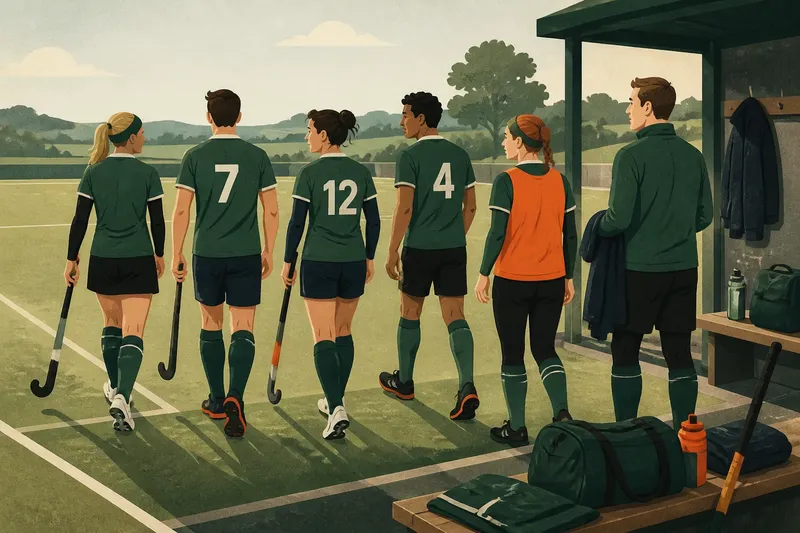
Say a community hockey side has agreed on a dark green shirt for fixtures, but players have different black or navy shorts. One player prefers a long-sleeved base layer, while another wears short sleeves. If the shirt remains visible and the team’s rules permit those variations, the group can look connected while each player dresses for comfort. The observable result is a clear shared focal point, not a row of identical outfits.
It helps to distinguish a deliberate variation from an accidental clash. A group can name its anchor colour, identify any pieces that must be consistent, and state where discretion begins. That brief agreement prevents personal style from becoming a last-minute dispute.
Which details make a mixed kit feel intentional?
When several garments differ, repetition in one or two places can bring them into conversation. A shared colour on the shirt and socks, a common trim, or a consistent choice of plain outer layer may be enough. Avoid trying to coordinate every surface: too many rules can make a relaxed outfit feel like a second uniform.
Pay attention to how colours meet rather than whether their labels agree. A deep green top and black shorts can read as a calm combination, while a bright orange layer may become the focal point. Fabric matters too: a glossy rain shell will look different from a matte cotton top even in similar shades. Choose combinations by looking at the garments together in the light and setting where they will be worn.
Logos and personal marks need not carry the whole visual identity. A plain garment in the club’s palette can support a branded top without adding another emblem. If a personal item has a large graphic or strong contrast, decide whether it draws attention away from required team markings before wearing it to a formal event.
What should a team agree before players get dressed?
A useful kit agreement is short and specific. It should separate requirements from preferences, leaving no one to interpret “look smart” in isolation. For example, a club might require the designated shirt for fixtures, permit plain dark lower garments, and leave training layers to each player.
- Name the garment or marking that identifies the team.
- State which colours are required for formal play.
- Say which items may vary, such as base layers or training shorts.
- Make clear whether personal logos or bold graphics are suitable.
- Allow practical layers for weather when the activity and rules permit them.
- Review the agreement if the sport, venue or event requirements change.
These decisions are easier when made before anyone spends money or arrives ready to play. They also help newer members understand the club’s style without assuming that belonging depends on owning a complete matching set.
Where does the matching kit myth leave us?
Matching kit works best as a tool for recognition, not a test of loyalty or taste. For formal competition, follow the required colours and markings. For practice and changing conditions, let comfort and function shape the outfit, with a shared colour or garment providing continuity where useful.
The matching kit myth fades once a team decides what truly needs to match. Keep that anchor visible, let the rest respond to the person and the occasion, and sporting style becomes more accommodating without becoming careless. A team can look like itself without asking every player to look exactly alike.