How the Modern Sporting Venue Changed the View
Explore how the modern sporting venue shapes spectatorship through boundaries, stands, roofs and materials, and see how architecture changes the feel of play.
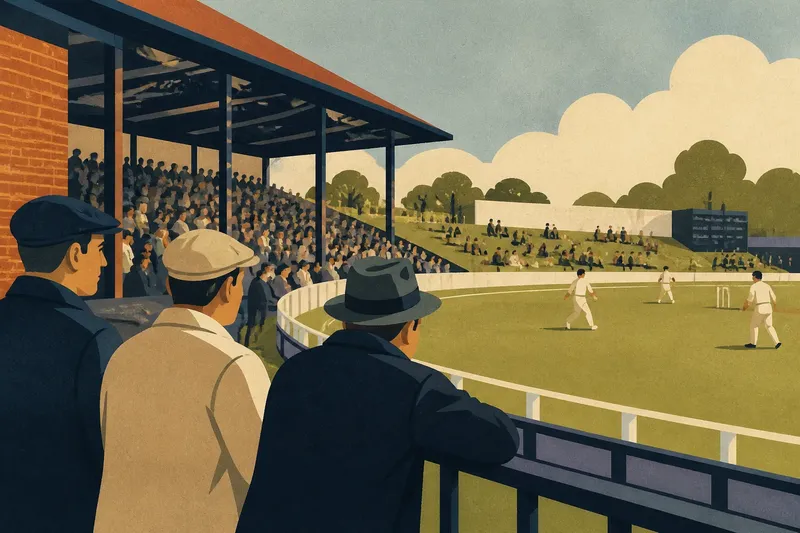
The most common mistake in understanding the modern sporting venue is to treat it as a larger patch of ground with seats around it. That overlooks how boundaries, stands and roofs shape the spectator’s view, and what they suggest about the relationship between play and audience. The change is visible in where people gather, what interrupts their sightline and how the crowd is arranged around the action.
Open ground and purpose-built venues have coexisted in different forms; there was no single, universal transition from one to the other. Across individual grounds, however, choices such as adding a bank, rail or stand can make a flexible gathering place more clearly organised for spectators. Those changes are not just a matter of comfort. They affect who can see, where people can gather and how the place makes sport feel shared.
How does a boundary frame the game?
A clear boundary helps players and spectators understand where play belongs. In a designed venue, that boundary also gives the eye a frame. Lines, boards and perimeter fencing hold attention on the field, much as a picture frame separates a scene from the room around it. The frame can focus the view, but it can also make the event feel set apart from everyday life.
An edge need not be a tall wall. A painted line, low rail, rope or change in surface can mark the playing area while preserving a sense of closeness. A higher barrier may give the audience a stronger sense of separation. The effect depends on the whole arrangement, including the distance between spectators and play.
An entrance and a defined edge also give a venue a particular identity. Visitors pass from a street or path into a place with its own signs and patterns of movement. That transition can make the ground feel like a recognised setting for sport rather than a space used temporarily for a game.
How do stands change what spectators can see?
Angle and elevation shape what a spectator can read. Near the boundary, a person may feel close to the pace and sound of play but find it harder to judge formations across the field. A higher position can reveal patterns and movement while making players seem less immediate. Neither view is simply better; each offers a different account of the same event.
A natural slope can let spectators gather above one another without a substantial structure. A constructed stand makes that elevation more deliberate, and rows set at different heights can help people see over those in front. But a plan that appears to offer a broad view can still produce awkward pockets of obstruction. Posts, railings, roofs and advertising boards all affect what reaches the eye.
Panoramic and close views are not interchangeable. One helps a spectator follow the shape of play across the whole field; another brings particular movements and sounds to the foreground. A venue’s design often balances these different ways of watching rather than offering one perfect vantage point.
How do seating and materials shape a venue’s character?
A bank of standing spectators can form a close, shifting group, with people adjusting their position as play moves. Individual seats establish a more fixed arrangement. A terrace, a long bench and an enclosed box can all face the same field, yet each gives spectators a different way to share space and respond to one another.
Materials contribute to the impression a ground makes. Timber benches, exposed brick, painted steel and concrete steps each have a distinct visual weight. Their appearance changes with weather, wear and upkeep. A structure that makes its practical purpose apparent can feel direct; a more polished enclosure can feel formal. Neither response is automatic, but material choices influence how a venue sits within its surroundings.
Sound is part of that character. A roof can shelter spectators and gather voices, while an open stand lets noise disperse. The shape of the space affects whether a reaction carries across the crowd or seems confined to one section. A venue presents the sport, but it also helps an audience hear itself.
What do common questions reveal about sporting venues?
Why are some stands built close to the playing area?
A close stand can make players seem present and give spectators a strong sense of pace. Its effect depends on the boundary, viewing angle and separation between the crowd and play, not closeness alone.
Why do some grounds have open corners?
An open corner can reflect the site’s shape, construction carried out in phases or a decision to retain views beyond the ground. It may connect the venue to its surroundings, though it can also make the crowd feel less enclosed.
How does a roof affect the spectator experience?
A roof offers shelter and can make a stand feel like a distinct gathering place. It also alters light and sound, while its position and depth affect how much of the field remains visible and how voices travel.
Why do standing terraces feel different from seats?
A terrace lets spectators adjust their position and respond collectively, while individual seats create a more fixed arrangement. That difference concerns not only comfort but also how people share space and how the crowd’s movement appears from the field.
What should you notice about a ground’s design?
To read a venue’s visual language, look at how its edges, levels and materials organise attention. Each observation can point towards a useful design interpretation:
- Check the playing edge. If a rail, rope or surface change clearly marks the boundary, read it as a deliberate frame for the action; if the edge is indistinct, consider how the design keeps the separation more open.
- Compare the viewing heights. If the ground has banks, terraces or raised stands, note how each changes the view across the field; if spectators remain at one level, consider the closer, more continuous relationship that arrangement creates.
- Look for visual interruptions. If posts, boards or roof supports cut across a likely line of sight, treat the view as a compromise between structure and openness; if they are kept out of the way, notice how the architecture recedes from the action.
- Read the roofline. If a roof covers the stand, consider how shelter and a sense of enclosure work together; if the stand is open above, look at how its exposed form connects spectators with the wider setting.
- Compare the materials. If timber, brick, steel or concrete is left visibly distinct, read the result as an emphasis on those materials’ practical character; if surfaces are finished into a uniform whole, note the more formal impression.
- Notice the crowd’s arrangement. If seating fixes spectators in individual places, interpret the layout as a more ordered audience; if a standing area allows people to shift together, consider the more fluid relationship between crowd and play.
Say a small community ground has a low rail along one touchline, a covered stand on the opposite side and open space behind the goals. The rail marks play without making the field feel distant; the stand offers a sheltered, elevated view; the open ends keep the venue visually connected to its surroundings. The resulting design trade-off is clear: spectators in the stand gain shelter and a wider view, while people near the rail stay closer to the action but have less elevation.
These details reveal the assumptions built into a place: whether spectators are expected to stand or sit, how closely they meet the playing area and whether the venue frames its surroundings or turns inward. The modern sporting venue is not merely a container around a game. Its boundaries, levels and materials shape a particular way of seeing sport.
When considering the modern sporting venue, notice which architectural element first organises your view: a rail, a roof, a terrace or the open edge of the ground. That detail can help explain not only what the venue shows you, but also the kind of relationship it creates between audience, sport and place.